Nous autres citoyens lambda africains, qui avons le même fonctionnement cérébral que nos dirigeants politiques africains qui, eux-mêmes, ont leur cerveau logé dans le crâne de la « communauté internationale occidentale », aimerions comprendre une petite chose toute bête.
Attention, nous sommes nuls, mais il nous arrive tout de même de comprendre certaines choses !
- Quand la « communauté internationale occidentale » décrète que NOUS, africains, malgré les 50 années qui nous ‘‘séparent’’ de la colonisation, nous ne sommes pas encore assez mûrs pour pouvoir exister et vivre de façon autonome, et que la « communauté internationale occidentale » a encore besoin de nous gérer, nous LES NULS d’Afrique, nous comprenons et nous nous taisons.

cote d'ivoire: la verite pour les nuls
- Quand la communauté internationale occidentale décrète que, dans NOTRE INTERET à nous, les NULS d’Afrique, il est préférable que nos chefs d’états africains soient indiscutablement choisi par et mis sous tutelle de la « communauté internationale occidentale », nous comprenons et nous nous taisons.
- Mais quand la « communauté internationale occidentale » ordonne à nos chefs d’états et responsables politiques africains – quoique sous tutelle – de prendre les armes et d’aller tuer les africains, et que nos chefs d’états et responsables politiques africains s’exécutent promptement, se mobilisent activement pour déployer armes et soldats pour aller tuer les africains, quand la « communauté internationale occidentale » qui multiplie les efforts pour raffermir sa propre économie et protéger ses propres populations, ordonne à nos chefs d’états et dirigeants politiques africains de s’auto-amputer, de se faire harakiri, de s’autodétruire, et que nos chefs d’états et dirigeants politiques s’exécutent comme hypnotisés, là, NOUS LES NULS d’Afrique, nous ne comprenons rien et, comme le ferait un petit enfant de 3 ans, nous posons à nos chefs d’états et responsables politiques africains, la naïve question :
POURQUOI ET ENCORE POURQUOI?
Nous, les NULS d’Afrique, savons qu’il y a actuellement une crise en Côte d’Ivoire, suite à des élections présidentielles à transparence douteuse, comme il y en eu au Gabon, au Congo Brazzaville, au Burkina Faso, et nous vous laissons compléter la liste.
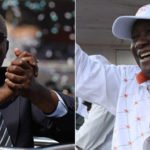
Ces élections en Côte d’Ivoire – si particulières – ont fini par nous offrir deux gagnants au lieu d’un seul. Nous avons donc, nous les NULS d’Afrique, compris que Messieurs Gbagbo et Ouattara ont tous deux gagné les élections, l’un contestant la victoire de l’autre.
Jusqu’ici, l’affaire est banale, classique, africaine et surtout IVOIRIENNE. Mais là où nous nous sentons un peu perdus et souhaiterions tout de même comprendre, c’est que personne ne souhaite connaître la vérité.
La presse de la « communauté internationale occidentale » nous a dit, que c’est Mr. Ouattara qui a gagné et nous les NULS d’Afrique, nous avons compris. Mais, comme tout le monde s’agite autour de cette élection, cette fois-ci, nous ne nous taisons pas et aimerions connaître la vérité.
- Mr Gbagbo, déclaré perdant par la « communauté internationale occidentale », soutenu par les forces armées de la Côte d’Ivoire, demande qu’il y ait une commission d’évaluation internationale pour fouiner dans les résultats de l’élection et chercher la vérité, la « communauté internationale occidentale » répond : « Nous ne voulons pas fouiner car nous n’avons pas besoin de connaître la vérité »
- Mr Ouattara, déclaré vainqueur par la « communauté internationale occidentale », soutenu par des forces armées parallèles, estimant que ses hommes armés n’ayant tué aucune mouche, brutalisé personne, intimidé personne, et que les forces armées de Mr. Gbagbo ayant massacré les populations et constitué des charniers, demande à la « communauté internationale occidentale » de venir fouiner dans ces massacres pour chercher la vérité, la « communauté internationale occidentale » répond : « on arrive, la vérité nous intéresse et Mr Gbagbo a déjà sa place à la CPI car déjà reconnu coupable avant l’enquête »
- Comment expliquer que, dans une affaire africaine aussi classique, la « communauté internationale occidentale » puisse, d’une manière si vigoureuse et si insouciante, pousser des africains à aller tuer d’autres africains pour un différend électoral dans un pays souverain, opposant ainsi des nations qui n’étaient pas en guerre les unes contre les autres, mais qui pourraient le devenir ? Des nations qui, jusqu’ici, vivent ensemble, en toute intelligence et s’organisent pour développer leur régions ?
- Comment expliquer que la « communauté internationale occidentale » ait déjà prévue d’organiser des services funèbres de masse avant même qu’il n’y ait une élection ou un seul mort ?
- Comment expliquer que la « communauté internationale occidentale » ne veuille pas chercher à découvrir la vérité et à nous la faire connaître, nous les NULS d’Afrique, mais préfère la guerre ?
Pourrions-nous, un jour, voir Messieurs Jonathan Goodluck, Abdoulaye Wade, Boni Yayi, etc. faire pression sur Mr. Nicolas Sarkozy et toute l’Union Européenne en les poussant à aller attaquer militairement un chef d’état européen impliqué dans un quelconque scandale dans son propre pays en Europe ?
Pour nous les NULS d’Afrique, la vérité c’est que une Afrique consciente, unie, stable, démographiquement et économiquement forte, dirigée par des responsables politiques qui sont africains dans leur chair, dans leur sang, dans leur âme et dans leurs intérêts, c’est une Afrique dangereuse que la « communauté internationale occidentale » veut à tout prix anéantir, et nous les NULS d’Afrique, nous devons absolument le comprendre et ne plus jamais nous taire.
Malheureusement, nos chefs d’états africains qui se disent indépendants depuis 50 ans, en ayant encore et toujours leur cerveau logé dans le crâne des autres, ne seront peut-être jamais capables de le comprendre jusqu’à la fin de leur triste vie.
Nous, les NULS d’Afrique, nous nous permettons de passer outre la pensée de notre grand-maître, la « communauté internationale occidentale », et de penser que si Monsieur Gbagbo ou monsieur Ouattara a l’intention de gouverner des hommes – le peuple – ce peuple a droit à la vérité.
Ouattara ou Gbagbo ne va pas gouverner que le nord ou le sud mais la Côte d’Ivoire toute entière, avec ses chrétiens, ses musulman, ses non croyants, ses différentes ethnies qui ont toujours été là, sur le sol ivoirien, comme composante de la société ivoirienne, une riche diversité qui fait le rayonnement de la Côte d’Ivoire.
Aujourd’hui, la pensée unique formatée depuis les boites crâniennes de la « communauté internationale occidentale » veut nous faire croire que le peuple ivoirien vient de se réveiller d’un sommeil millénaire pour se rendre compte qu’il est composé d’une multitude ethnies et de religions et que c’est cela son problème.
Si les ivoiriens acceptaient cette pensée, alors, nous les NULS d’Afrique, nous serions très, très tristes de comprendre que nous sommes réellement NULS car la crise ivoirienne est politique comme il y en a partout où il y a des hommes actifs sur terre ; cette crise n’est ni unique, ni étrange, ni ethnique, ni religieuse, ni autre chose comme on voudrait nous le faire croire ; ce n’est ni plus, ni moins une crise politique.
Nous pensons que pour dissiper toute ambigüité et conférer une légitimité incontestable à celui des deux hommes qui aura les destins des millions d’âmes entre les mains, l’électorat ivoirien et les NULS d’Afrique ont droit à la vérité, à moins que les hommes de la Côte d’Ivoire ne comptent pas et que seuls comptent le sol et le sous-sol de la Côte d’Ivoire.

Lula

PDCI

Dr zagbla

Kouaho Guy GUEYE


 The so-called electoral crisis in Ivory Coast hardly has any African Press, any African perspective, to present it.
 Firstly, how not to develop an African perspective. Much of what Zimbabwe has got on the situation in Ivory Coast has to come from Agence France Press (AFP) and Reuters, reaching us largely through Zimpapers. With what we have gone through from 2000 until 2008 – no less than four Ivory Coast-like electoral situations – I fail to understand why we think media systems of meddlesome ex-colonial powers can give us clean news on situations similar to what the BBC and the entire British media distorted here. Western power is mediated and mediased and western media networks are partners in imperial conquest. They have always been imbedded, always armed with the reflex of an occupying power. We who used to tell the rest of Africa not to be misled by the British and American media surely cannot ourselves rely on French media for reportage on events happening in an ex-French colony that has chosen to free itself?
 How does the UN, itself the failed supervisor of the whole process, rise above the same process in judgment? Indeed hurry to favour one result against the other, and do so against its loudly proclaimed failure to demilitarize the North in order to create even conditions for a national poll? Who failed Ivory Coast, Gbagbo, or the UN? Who deserves to leave Ivory Coast, Gbagbo or the effete UN? What deserves to come in, a fair ballot or a full invading battalion. Congo in the early 1960s showed us how the UN can in fact be used to suppress and even assassinate legitimate interests of a people. Congo in Africa’s 1960s showed us how meddlesome colonial powers can piggy-bag their sinister designs on a UN operation. Today, Ivory Coast shows Africa yet again how the UN is no insurance against electoral rigging, indeed against a destabilizing electoral process.